Los Angeles (404) 502-3502
Next Level Garage Doors And Gates
Garage Door Repair Services in Los Angeles

Los Angeles Local

Garage Door Repair Services in Los Angeles

Licensed CA contractor #1135023, serving LA homeowners and businesses with fast, reliable repairs.

Request an estimate

Tell us what you need

No obligation


By submitting this form you agree that we may contact you about your request and share your name and email address with partner companies for email marketing. We never share your mobile number or text message consent with third parties or affiliates for marketing or promotional purposes.

  • CA License #1135023D-28 Doors, Gates and Activating Devices Contractor
  • 10+ years in the LA marketServing LA, Orange, Riverside, San Bernardino, and Ventura counties
  • 1,000+ completed jobsResidential and commercial across the greater LA basin
  • BBB Accredited BusinessIndependent third-party accreditation on file

LA's Garage Door Repair Specialists

Next Level Garage Doors And Gates provides garage door repair services across Los Angeles, handling everything from broken springs and snapped cables to off-track panels and failed openers. We're a licensed California contractor (license #1135023) with over 8 years working on residential and commercial doors throughout the greater LA area. When your door won't move, call (404) 502-3502 and we'll get someone on it fast.

The most common garage door repair we see is a broken torsion spring. That's not a coincidence: torsion springs carry the full weight of the door every single cycle, and the average residential door opens and closes 1,500 to 2,000 times a year. Spring failure isn't gradual; it's sudden, and a door with a broken spring can drop without warning. Beyond springs, we service cables, rollers, tracks, panels, openers, sensors, keypads, and bottom seals. Cost depends on what's failed, whether the door is steel or wood, single or double, and the age of the hardware. Every job is different, contact Next Level Garage Doors And Gates for an accurate estimate.

Every Repair We Handle

One call covers the full door system, from springs to bottom seal.

Spring Repair and Replacement

Torsion springs mount above the door on a steel shaft; extension springs run along the side tracks. Both store enormous tension and both can fail without warning. We replace broken or worn springs with correctly rated hardware matched to your door's weight, so the door lifts evenly and the opener doesn't strain.

Cable Repair and Replacement

Cables work alongside the springs to keep the door balanced. A frayed or snapped cable causes the door to drop on one side, which jams the track and stresses the opener motor. We replace cables in pairs so both sides wear at the same rate, keeping the door level through thousands of cycles.

Off-Track Door Repair

An off-track door is a security gap and a safety hazard at the same time. It usually means a broken cable, a bent track section, or a roller that's jumped its channel. We realign the door, inspect every roller and hinge, and straighten or replace track sections that are too damaged to hold alignment.

Opener Repair and Replacement

A malfunctioning garage door opener can disrupt your entire day. Whether the motor's grinding, the logic board has failed, or the remote just won't sync, our team diagnoses the issue and repairs or replaces the unit. We work on belt-drive, chain-drive, and screw-drive openers, and we can program new remotes and keypads on the spot.

Roller Replacement

Worn rollers are the most overlooked cause of a noisy or jerky garage door. Nylon rollers run quieter than steel and don't corrode, which matters along the coast where salt air accelerates metal fatigue. We swap worn rollers with durable replacements that extend the life of the entire door system.

Bottom Rubber and Panel Repair

A cracked bottom seal lets in drafts, moisture, pests, and dust, especially common on older LA properties with uneven garage floors. We replace bottom rubber seals and repair or swap out damaged panels, matching the existing design so the door looks consistent and seals properly at every point.

Local Knowledge

Why LA Doors Fail Faster Than You'd Expect
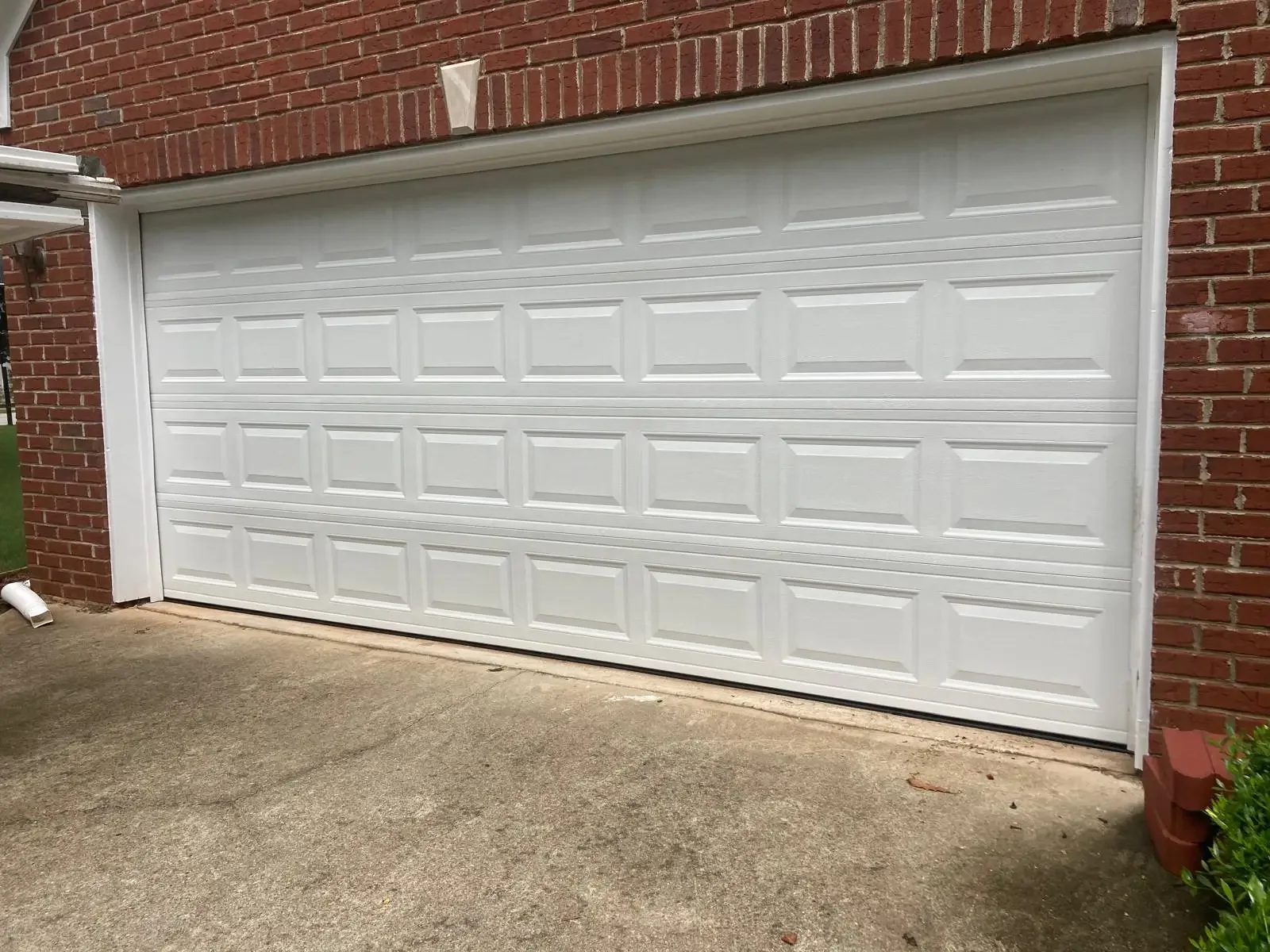
Los Angeles looks mild on paper, but it's harder on garage doors than most homeowners realize. Along the coast, from Santa Monica down through San Pedro, salt air accelerates corrosion on steel springs, cables, and hinges at a rate that would surprise anyone who moved here from inland. In the San Fernando Valley, summer temperatures can swing 40 degrees between morning and afternoon, and that thermal expansion and contraction cycles through the torsion spring every single day. Older housing stock in Glendale and parts of the Eastside often still has the original track systems from the 1960s and 1970s, with hardware that was never built to handle a modern heavy-insulated door. We see earthquake-related track misalignment more than most contractors admit, too: a tremor that doesn't crack a wall can still nudge a track section just enough to cause binding. We know what to look for because we've been working on LA doors, in these specific conditions, for over 8 years.
White raised-panel garage door on a red brick residential home in Los Angeles

Quick Reference

Signs Your Garage Door Needs a Repair Call Now

None of these get better with time. The longer you wait, the more parts are affected.

The door moves on one side only

One-sided movement means a cable or spring has failed on that side. Running the door this way bends the tracks and can pull the opener arm off the carriage bracket.

You hear a loud bang from the garage

That sound is almost always a torsion spring snapping under load. The door will feel extremely heavy and may not move at all. Don't try to force it open manually.

The opener runs but the door doesn't move

Either the trolley has disconnected from the carriage, or a broken spring has made the door too heavy for the opener to lift. Both need a technician, not a YouTube tutorial.

The door reverses before it closes

The safety sensors at the base of the tracks are misaligned or obstructed. This is a federal safety requirement; the reversal is intentional. Sensor alignment is a straightforward fix, but an obstructed beam can also signal something else blocking the path.

Our Process

How We Work: From Call to Finished Repair

  1. Diagnose the Full System

    We don't just fix the obvious failure and leave. Every service call includes a visual inspection of springs, cables, rollers, tracks, and the opener, so we catch what caused the problem and anything else that's close to failing.

  2. Explain the Repair, Then Do It

    Before any work starts, we tell you exactly what's wrong, what the fix involves, and what it will cost. No surprises on the invoice, no repairs you didn't authorize.

  3. Test Every Cycle Before We Leave

    We run the door through multiple full open-and-close cycles, check the auto-reverse safety function, and confirm the opener force settings before we pack up. If something's off, we find it while we're still there.

Repair vs. Replace: The Honest Answer
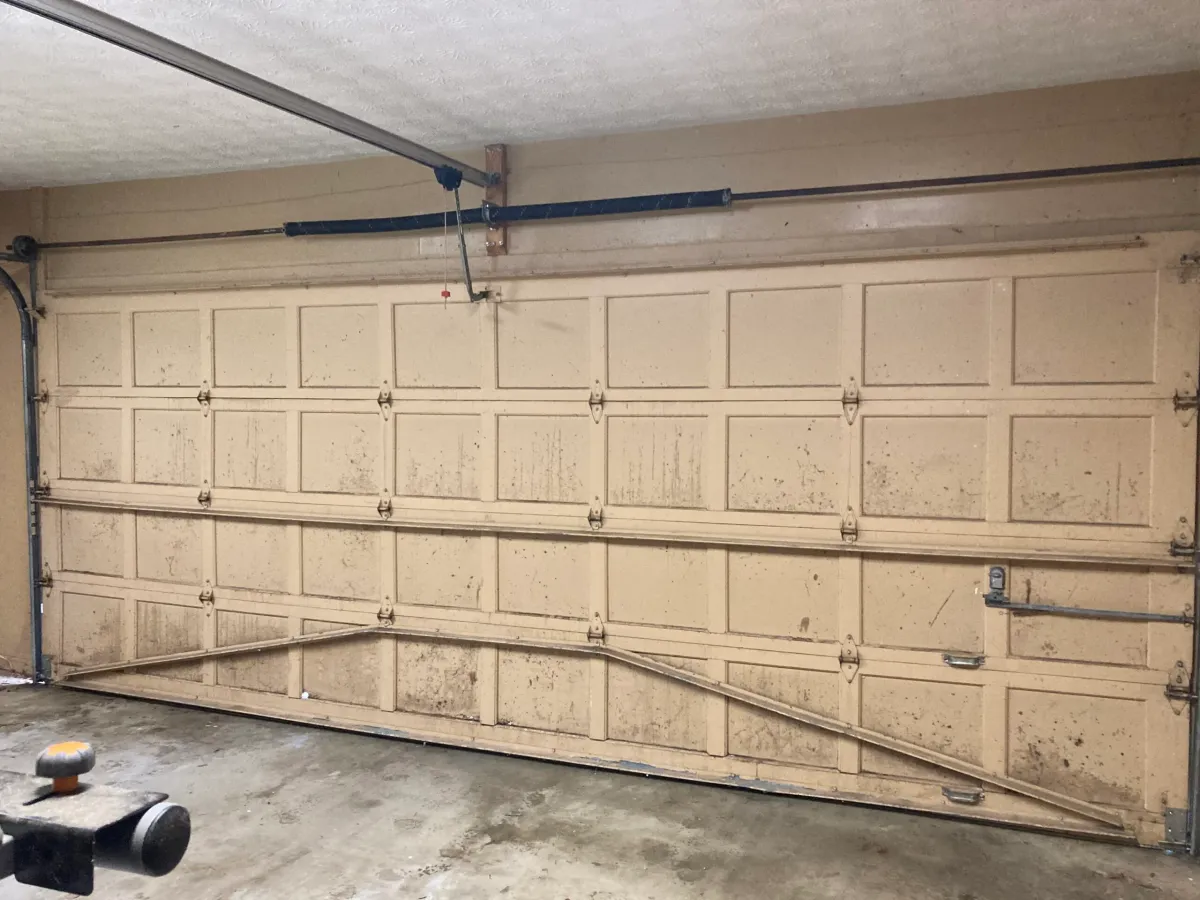
Most of the time, repair is the right call. A door that's structurally sound, with good panels and a working track system, can last for decades with the right hardware. We'll replace springs, cables, rollers, and openers all day long without recommending a new door unless the door itself is the problem. That said, some doors are past the point of cost-effective repair: severe panel damage, a frame that's bent from an impact, or original 1970s-era hardware on a door that's been modified beyond its original design. In those cases, we'll say so plainly. Check out our latest projects to see the range of work we handle on both repairs and full installs, and if you're weighing the decision for your own door, call (404) 502-3502 and we'll give you a straight answer.
A garage door with visible sagging and bowing in the bottom panels, showing structural failure in a residential garage interior.

Service Area

Neighborhoods We Reach Across Greater LA

We run calls across the city and into the surrounding communities. If you're near any of these areas, we can reach you. For gates services or full gate repair, we cover the same territory.

Common Garage Door Questions

What is the most common garage door repair and why does it keep happening?
Broken torsion springs are the most common repair we run on in Los Angeles. A standard torsion spring is rated for roughly 10,000 cycles; an active household can burn through that in 5 to 7 years. The spring stores energy every time the door closes and releases it on the way up, which means it's under load constantly. When it fails, it usually goes all at once, not gradually. Replacement is a two-spring job, so both sides wear evenly going forward.
What's the difference between torsion and extension springs, and which is safer?
Torsion springs mount horizontally above the door on a steel shaft and wind under tension. Extension springs stretch along the side tracks and are under load when the door is closed. Torsion systems are generally safer because the spring is contained on the shaft; a broken extension spring can release violently if it doesn't have a safety cable running through it. Most doors installed in the last 20 years use torsion systems. If yours has extension springs without safety cables, that's worth addressing.
How do I know if my garage door sensors need adjustment versus replacement?
The sending sensor (LED stays solid) and the receiving sensor (LED blinks or goes out) need a clear line of sight with nothing between them. Start by checking for debris, a spider web, or direct sunlight hitting the receiver, which can blind it. If the LED on the receiver is blinking, realign both sensors until both LEDs are solid. If the problem continues after alignment, the sensor lens may be damaged or the wiring at the terminal has a break. That's when replacement makes sense.
When should I repair my garage door versus replace it entirely?
Repair makes sense when the door's structural panels and frame are intact and the failure is hardware: springs, cables, rollers, opener, or tracks. Replace the door when multiple panels are bent or cracked, when the bottom section has been hit hard enough to distort the frame, or when the door was manufactured before modern insulation standards and your energy bills reflect it. A good rule: if the hardware cost exceeds 50 to 60 percent of a new door's installed price, the math usually favors replacement.
Why does my garage door make grinding or squeaking noises, and is it fixable?
Grinding usually means metal-on-metal contact: worn rollers running against the track, a dry torsion spring, or a chain-drive opener that needs lubrication. Squeaking on a belt-drive opener is less common but can mean the trolley carriage is worn. Most noise issues are fixed with new nylon rollers and a proper lubrication pass on the springs and hinges using a lithium-based spray, not WD-40. WD-40 attracts dust and accelerates wear on garage door hardware.
Can the garage door opener be repaired, or does it always need to be replaced?
Often the opener itself is fine and the problem is the logic board, a stripped gear set, or a remote that needs reprogramming. Gear kits are a fraction of the cost of a new unit and extend opener life significantly. We'll diagnose before we recommend anything. That said, if an opener is more than 15 years old and the motor is struggling on a door with good springs, replacement is usually the better long-term spend.
How expensive is it to repair a garage door?
Cost depends on what's failed: a roller swap is far less involved than a torsion spring replacement or a full panel section. Door weight, material, and age of the hardware all affect the scope of work. We don't publish a rate list because the same symptom can have two very different causes, and pricing before we see the door does the customer no favors. Every job is different, so contact Next Level Garage Doors And Gates for an accurate estimate.
Can a handyman replace a garage door opener?
Technically yes, but a handyman who isn't licensed for door work in California won't carry a D-28 Doors, Gates and Activating Devices Contractor license, which means any safety-related issue that arises may not be covered. We're licensed under CA license #1135023, so the work is done by a contractor who's accountable for it. Opener installation also involves force limit calibration and safety sensor testing, both of which matter more than most people realize.
Why does my garage door make grinding or squeaking noises?
Grinding usually means worn metal rollers running against the track or a dry torsion spring. Squeaking on a belt-drive opener often points to a worn trolley carriage. Most noise issues resolve with new nylon rollers and proper lubrication on springs and hinges. Use a lithium-based spray, not WD-40. WD-40 attracts dust and accelerates wear on every component it touches.
How do salt air and coastal conditions in LA affect my garage door?
Salt air along the coast, from Santa Monica down through the South Bay, corrodes steel springs, cables, and hinges faster than inland conditions. Metal hardware that might last 7 to 10 years in a dry climate can show significant rust and fatigue in 3 to 5 years near the ocean. Nylon rollers, galvanized cables, and routine lubrication all extend component life in coastal environments.

Ready to Get Your Door Working Right?

Next Level Garage Doors And Gates. Licensed CA contractor #1135023. BBB accredited. Over 8 years serving Los Angeles.

Related

Next step

Tell us about the job

Your name, your number and what needs doing. A person from Next Level Garage Doors And Gates gets back to you.

Rather talk now?(404) 502-3502

No obligation


By submitting this form you agree that we may contact you about your request and share your name and email address with partner companies for email marketing. We never share your mobile number or text message consent with third parties or affiliates for marketing or promotional purposes.