
Los Angeles Local
Garage Door Repair in Santa Clarita, CA
CA License #1135023, BBB accredited, and serving Valencia, Canyon Country, and every neighborhood in between.
Request an estimate
Tell us what you need
- CA License #1135023D-28 Doors, Gates and Activating Devices Contractor
- 10+ years in the LA marketServing LA, Orange, Riverside, San Bernardino, and Ventura counties
- 1,000+ completed jobsResidential and commercial across the greater LA basin
- BBB Accredited BusinessIndependent third-party accreditation on file
Santa Clarita Garage Door Repair Done Fast
Next Level Garage Doors & Gates handles garage door repair in Santa Clarita, CA, from broken torsion springs and snapped cables to off-track panels and failed openers. If your door won't move, moves unevenly, or slams shut without warning, we're the local call that gets it fixed. CA License #1135023 and BBB accredited, we bring verifiable credentials to every job, not just a business card. Call (404) 502-3502 and speak directly with someone who can tell you what's wrong and what it'll take to fix it.
Santa Clarita's climate creates specific wear patterns you won't see in coastal Los Angeles. The valley runs dry and dusty through long stretches of summer, and that grit works its way into roller bearings, cable drums, and track channels faster than most homeowners expect. Most homes in Santa Clarita were built around 1987, which means the original hardware on a lot of garage doors here is past its design life. Add the clay-heavy soil the valley sits on, which can shift door frames over time, and you've got a recipe for doors that start sticking, dragging, or bouncing off their tracks. Our garage door services are built around these exact conditions, not a generic checklist.
What Goes Wrong With Garage Doors in Santa Clarita
Dust, clay soil, and aging hardware combine in ways most people don't expect.
Broken Springs
Torsion springs carry the full weight of your door every time it opens. They have a finite cycle count, and doors in Santa Clarita tend to hit that limit faster because dust and grit accelerate wear on the coils. A broken spring is not a DIY fix. The stored tension in a torsion spring is enough to cause serious injury, and we don't recommend anyone touch one without the right tools and training.
Off-Track Doors
Santa Clarita has older tracts where clay soil movement can nudge foundations and door frames out of square over the years. When the frame shifts even slightly, the door can jump its tracks. Running a door in that condition bends rollers and warps panels fast. If your door is grinding or running visibly crooked, stop using it and call us.
Opener Failures
Opener motors work harder when dust-clogged rollers create excess resistance. The motor wasn't sized for that load, so it overheats and fails early. We see this pattern regularly with older belt-drive and chain-drive units in homes that haven't had a tune-up in years. Sometimes a sensor realignment or a logic board reset is all it takes. Sometimes the unit needs replacing.
Doors That Slam Shut
A door that drops fast or slams closed has almost certainly lost spring tension. It can also mean a cable has frayed and slipped on the drum. Either way, the counterbalance that's supposed to control descent isn't working, and the full weight of the door is falling freely. That's a safety issue that needs same-visit attention.
Cable Wear and Fraying
Cables fray slowly and then fail suddenly. Grit from Santa Clarita's dry conditions acts like sandpaper on cable strands over time. By the time you can see fraying on a cable, it's already close to failure. We inspect cables on every service call because a broken cable drops the door on whatever is underneath it.
Panel Damage
Dented or cracked panels aren't always cosmetic. A compromised panel section changes the structural rigidity of the door, which puts more stress on the hardware holding it in place. We'll tell you honestly whether a panel swap makes sense or whether the door is better served by a full replacement, and we won't push you toward the more expensive option if the repair is the right call.
Before You Call
Troubleshooting Steps Worth Trying First
Some garage door problems resolve without a service visit. Here's where to start.
Check the Photo-Eye Sensors
The two sensors mounted near the floor on each side of the door send an invisible beam across the opening. If anything breaks that beam, or if the sensors are dirty or misaligned, the door won't close. Wipe the lenses with a dry cloth and make sure both indicator lights are solid, not blinking.
Inspect the Manual Disconnect
There's a red cord hanging from the opener's trolley. If someone pulled it, the door is disconnected from the motor and won't respond to the opener. Pull the cord toward the door (not straight down) to re-engage. You'll feel or hear it click back into the trolley.
Check the Travel Limit Settings
If your door won't open all the way, the opener's travel limits may be set too short. Most openers have adjustment screws on the motor unit labeled 'Up' and 'Down.' Consult your opener's manual before adjusting, but this is a common cause of doors that stop before fully open or fully closed.
Reset the Opener
Unplugging the opener for 30 seconds and plugging it back in clears minor logic errors. It does not reset remote codes on most modern units, so you won't need to reprogram your remotes. If the issue was a momentary power surge or a stuck relay, a reset often fixes it.
Local Context
Repair vs. Replacement in Santa Clarita
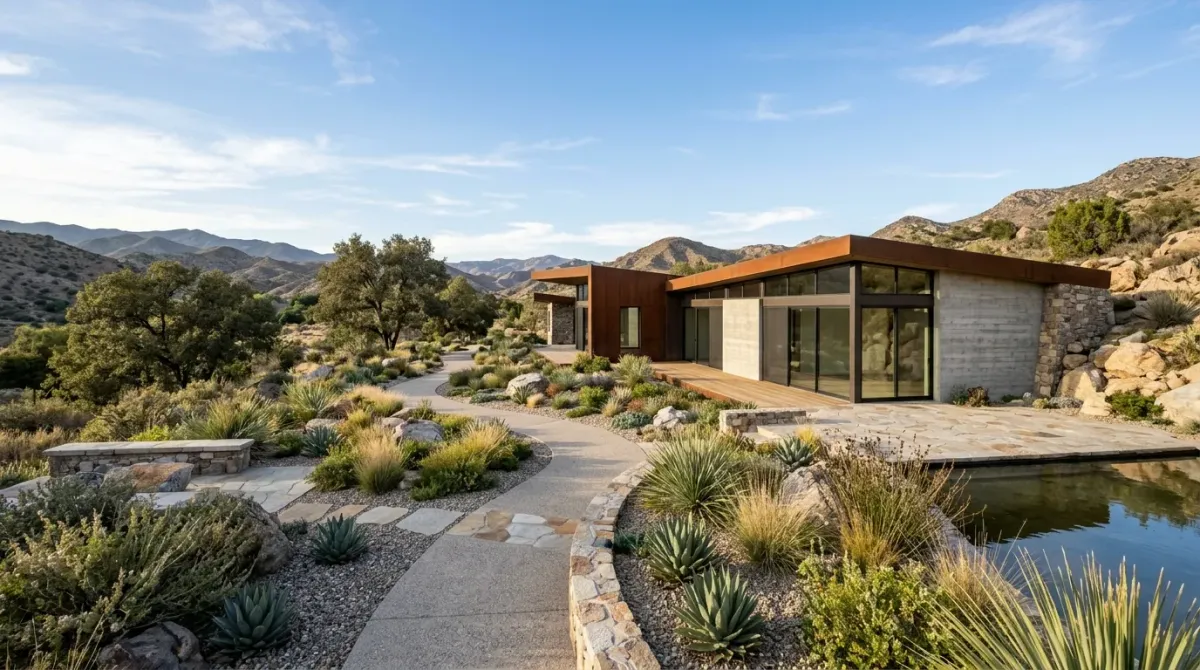
Gates and Garage Doors: One Call Covers Both
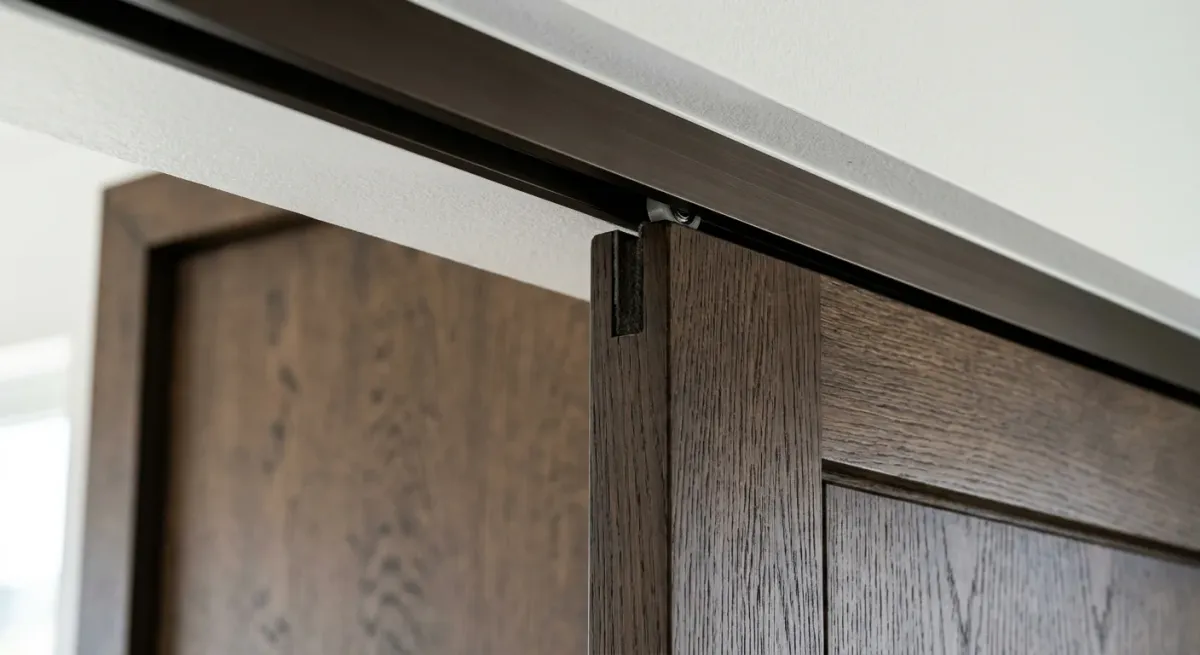
How a Tune-Up Extends Door Life in This Climate
Clean and Lubricate Moving Parts
Santa Clarita's dry, dusty conditions mean rollers, hinges, and springs accumulate grit faster than average. We clear out debris from the track and apply the right lubricant to each component, which reduces wear and cuts the noise a dry door makes on every cycle.
Tension and Balance Check
A door that's out of balance works the opener motor harder than it should on every cycle. We test the balance manually, adjust spring tension as needed, and verify the opener isn't compensating for a mechanical problem it wasn't designed to handle.
Safety Reversal and Sensor Test
Automatic garage doors are required to reverse on contact with an obstruction. We test both the mechanical reversal and the photo-eye sensors, confirm the reversal force is within safe limits, and clear any sensor alignment issues before we leave. We test both the mechanical reversal and the photo-eye sensors, confirm the reversal force is within safe limits, and clear any sensor alignment issues before we leave.
Neighborhoods We Serve in Santa Clarita
We cover the full Santa Clarita Valley, from the dense residential tracts in Valencia and Canyon Country to the hillside properties in Stevenson Ranch and Saugus. If you're in the SCV, you're in our service area.
In the field
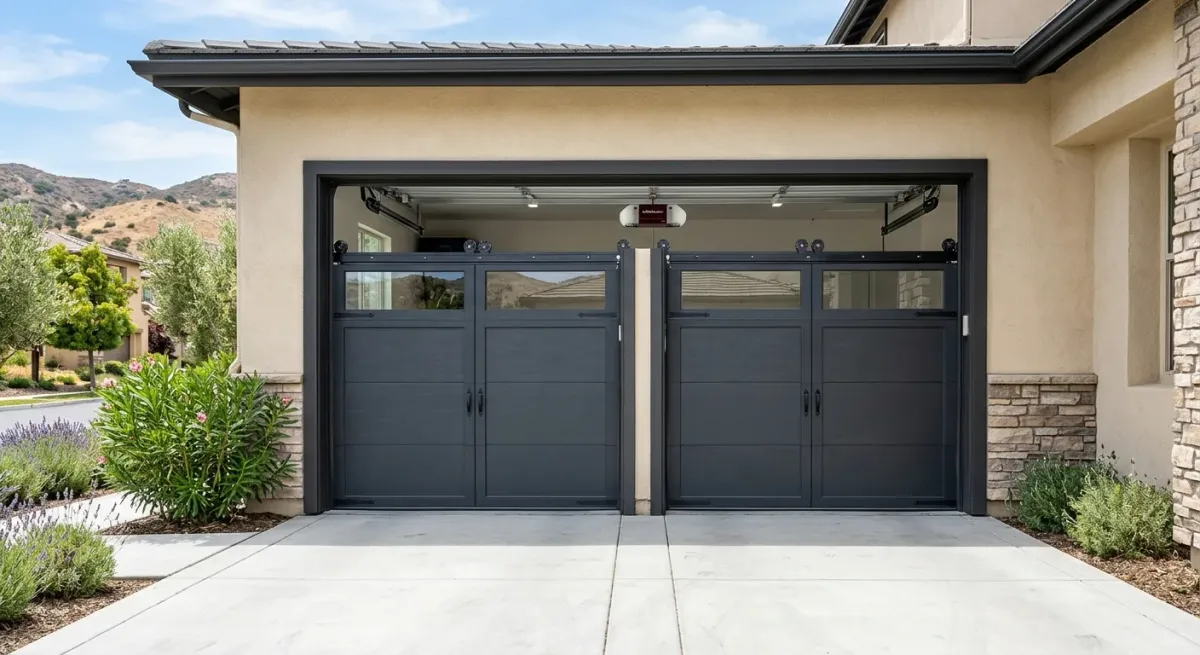
A look at our work
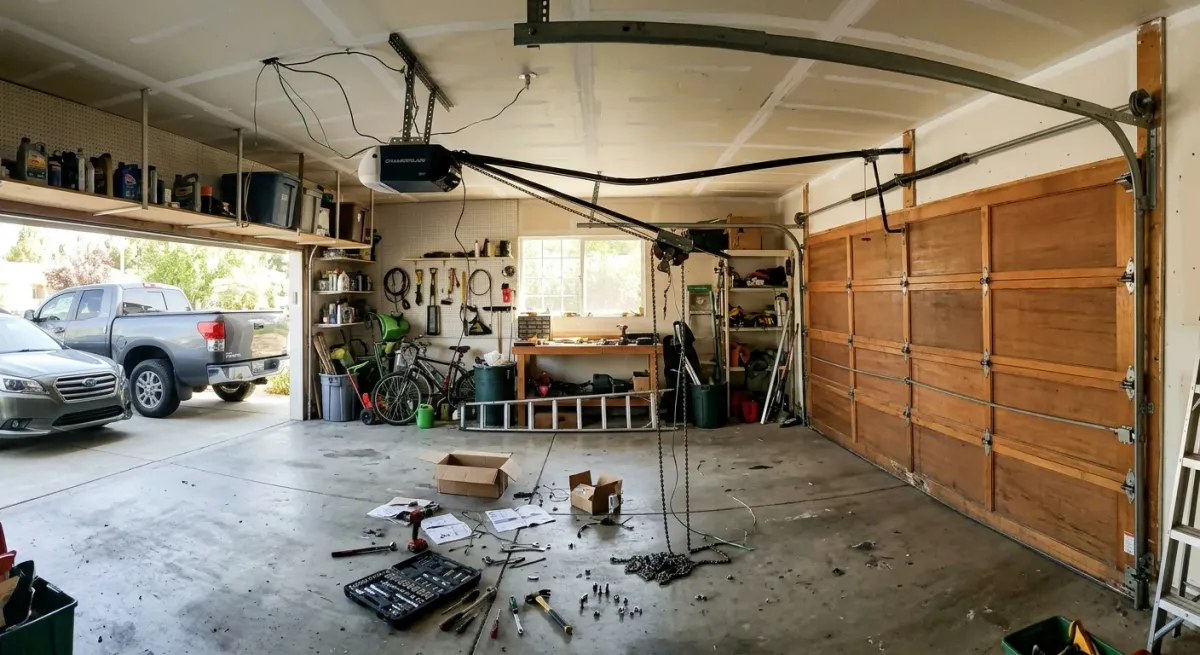
Ready to Fix Your Garage Door in Santa Clarita?
Call (404) 502-3502 and talk directly to someone who can schedule your service in Santa Clarita today.
Frequently asked questions
Why does my Santa Clarita garage door slam shut instead of lowering slowly?
How does Santa Clarita's dust and dry climate affect my garage door?
My garage door in Valencia won't open all the way. What's causing it?
Do I need a permit for garage door work in Santa Clarita?
How do I know if my Canyon Country garage door needs repair or full replacement?
Is it safe to do garage door spring or cable work myself in Santa Clarita?
Related
Next step
Tell us about the job
Your name, your number and what needs doing. A person from Next Level Garage Doors And Gates gets back to you.
Rather talk now?(404) 502-3502